
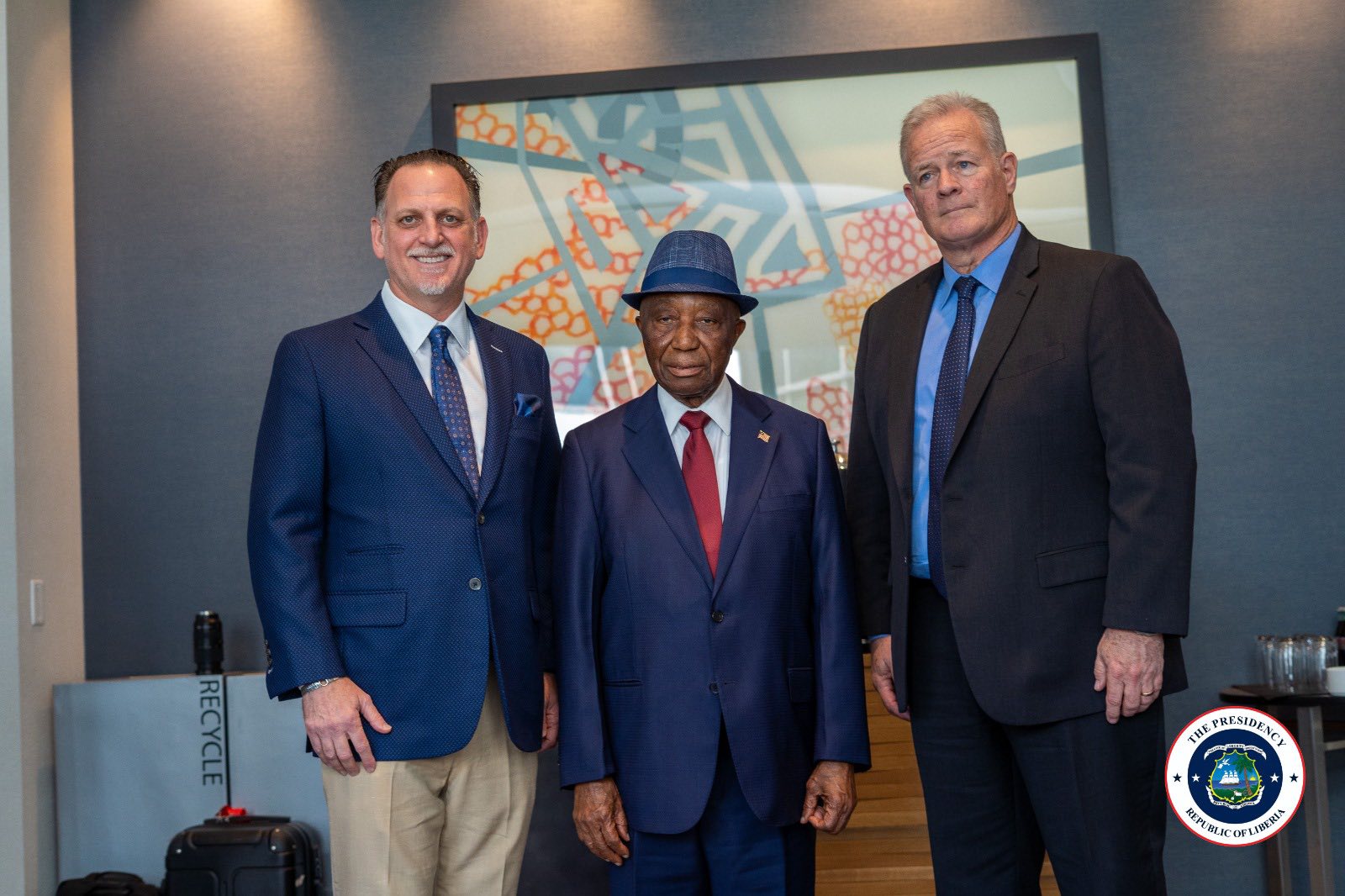
The recent commentary in the Liberian Observer suggesting that President Joseph Nyuma Boakai, Sr.’s visit to California represented “missed opportunities” deserves a respectful but firm correction. While constructive public commentary is an important feature of democratic engagement, such commentary must be grounded in the full facts, the realities of presidential protocol, and the structure of the official program as arranged by the host institution.
President Boakai’s visit to California was not an open-ended political tour. It was a carefully scheduled official engagement centered on his selection as recipient of the Africa Peace Leadership Award and his keynote address at the 34th Africa Peace Awards of the Center for African Peace and Conflict Resolution at California State University, Sacramento. As is customary for visits by a sitting Head of State to the United States, the program was time-bound, security-sensitive, and coordinated through established institutional and diplomatic channels.
The central claim that the Embassy failed to connect the President with community leaders is therefore misplaced. The Embassy, recognizing the central role of the host institution, appropriately directed community leaders and interested stakeholders to coordinate their requests through CAPCR, which was responsible for organizing the official program in close coordination with relevant partners, including Liberian community representatives. This was not an act of exclusion; it was a necessary matter of protocol, order, security, and effective program management.
Indeed, the Liberian community was meaningfully represented. The President participated in a successful interactive session with members of the Liberian community, and community members were also overwhelmingly represented at the awards ceremony. While some may have preferred a different format or additional individual meetings, the record does not support the conclusion that the community was ignored or that its leaders were deliberately sidelined.
It is also important to correct the assertion that President Boakai did not meet with the Mayor of Sacramento. The President did meet with Mayor Kevin McCarty of Sacramento. His engagement with the President reflected the appropriate local government protocol for the occasion.
Regarding the Governor of California, the absence of a meeting should not be interpreted as a diplomatic failure. The President’s visit coincided with the Governor’s travel schedule, as clarified by the Governor’s office. In diplomacy, not every desired meeting can be accommodated within the constraints of official calendars, security arrangements, and the limited duration of a Head of State’s visit. The absence of such a meeting does not diminish the significance or success of the visit.
The visit achieved its principal objectives. President Boakai was honored by a respected American university-based peace institution. He delivered a major address on peace leadership in Africa and the diaspora. He engaged the Liberian community. He highlighted Liberia’s transition from conflict to democratic stability. He strengthened Liberia’s image as a country committed to reconciliation, rule of law, peacebuilding, and constructive international partnerships.
The Embassy of Liberia in Washington, D.C., acted within its proper diplomatic role by supporting the visit, coordinating with the host institution, and ensuring that community engagement occurred through appropriate channels. Presidential visits are not improvised events. They are governed by protocol, host arrangements, security considerations, and time limitations. To suggest otherwise risks misunderstanding the operational realities of diplomacy.
Liberians at home and abroad should welcome scrutiny of public service, but such scrutiny is most useful when it is balanced, factual, and fair. In this case, the evidence points not to missed opportunities, but to a successful visit that elevated Liberia’s peacebuilding credentials, honored the President’s leadership, engaged the diaspora, and strengthened the bonds between Liberia, Sacramento State, CAPCR, and friends of Liberia in California.
The more constructive lesson is not that the visit failed, but that future engagements can build upon its success by continuing to improve coordination among the Embassy, host institutions, local government officials, and Liberian community organizations. That is the spirit in which national dialogue should proceed: with fairness, accuracy, and a shared commitment to advancing Liberia’s image and interests abroad.
Al-Jerome Anastas Chede Sr.
Minister Counselor
Press and Public Affairs
Embassy of Liberia
Washington DC
press@liberianembassyus.org
+1612-23-8051(cell)
+1202-723-0437 (office)
 Send by email
 PDF version